


Narcissistic Abuse and Eating Disorders: Why Control, Shame, and Trauma Show Up in the Body
Updated: Apr 13

Narcissistic Abuse and Eating Disorders
Why Control, Shame, and Trauma Show Up in the Body
Trauma-Informed Narcissistic Abuse Recovery Coach, Randi Fine
Narcissistic Abuse Recovery Coaching with Randi Fine
If you are struggling with disordered eating after a narcissistic relationship, you are not imagining the connection. Narcissistic abuse and eating disorders are deeply linked through trauma, control, shame, and nervous system dysregulation. For many survivors, food is not the problem. It is one of the places where unresolved psychological harm has manifested. This is part of why narcissistic abuse often feels so dehumanizing long after the relationship ends.
Eating disorders often emerge as survival responses after prolonged emotional manipulation. They are not about vanity or discipline. They are about regaining control, managing shame, and surviving a body that has learned it is not safe.
Narcissistic Abuse Creates a Loss of Autonomy
In narcissistic abuse, personal freedom is taken piece by piece. You start to question your own thoughts. Your feelings are dismissed. Your needs feel like a problem. Eventually, you learn that staying safe means complying, staying quiet, and shrinking yourself.
When external control becomes inescapable, the body looks for a place to reclaim autonomy. Food and eating behaviors often become that place. Restriction, bingeing, purging, or rigid rules can feel like the only remaining area of choice.
This is not a conscious decision. It is a nervous system adaptation to powerlessness.
Shame Becomes Internalized and Embodied
Narcissistic relationships rely on conditional approval. Love is earned through performance and withdrawn through criticism. Over time, this creates deep internalized shame.
That shame does not disappear. It relocates into the body.
Weight, hunger, appetite, and appearance stop being health focused and become emotionally loaded. The body becomes the place where worth is measured and punished. Disordered eating is not the source of shame. It is where shame takes root.
Trauma Keeps the Nervous System Dysregulated
Living under the constant threat of narcissistic abuse keeps the nervous system stuck in survival mode. Stress hormones stay high. Digestion gets thrown off, and the body stops sending clear signals about hunger and fullness.
Some survivors lose their appetite entirely. Others experience intense cravings or binge cycles as the body seeks grounding and relief through dopamine. This is not a failure of self control. It is physiology responding to chronic threat.
Body Autonomy is Repeatedly Violated
Many survivors experienced appearance based criticism, food monitoring, sexual objectification, or ridicule of bodily needs. When the body is treated as something to be managed or controlled by someone else, it no longer feels safe.
Disordered eating can become a way to numb the body, punish it, disappear from it, or rigidly control it so it cannot be used against the survivor again.
Narcissistic Abuse Destroys Self Trust
A defining feature of narcissistic abuse is the erosion of self trust. When hunger is treated as inconvenient or wrong, you stop listening to your body. When emotions are labeled as overreactions, you stop trusting how you feel. When intuition is questioned or overridden, you stop listening to your inner guidance.
Eating disorders thrive in this environment. You start relying on rules instead of body signals. Instead of listening to hunger or fullness, you start relying on calories, portions, or the scale to tell you what to do. Controlling food feels safer than listening to a body you were taught not to trust.
The disorder is not about discipline. It is about the loss of internal authority.
Why Symptom Focused Treatment Often Falls Short
Many eating disorder treatments focus on behavior without addressing relational trauma. Survivors may comply outwardly while remaining deeply dysregulated inside.
Healing narcissistic abuse and eating disorders requires more than changing food behaviors. It requires restoring nervous system safety, rebuilding body trust, separating shame from identity, and reclaiming autonomy that was taken through psychological control.
Without this deeper work, symptoms often shift rather than resolve.
A Trauma Informed Reframe
Eating disorders in survivors of narcissistic abuse are not signs of weakness or pathology. They are intelligent adaptations to prolonged emotional captivity.
When safety returns and self trust is restored, the body no longer needs to speak through food.
Healing begins when control is replaced with compassion and listening.
Gentle Next Step
If you are navigating the confusing aftermath of narcissistic abuse and disordered eating, you are not broken and you are not alone. Healing is possible when the trauma beneath the symptoms is finally understood.
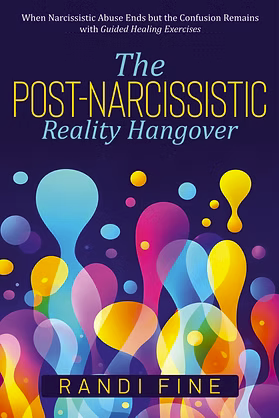
If you would like deeper guidance, support, and structured healing tools, explore the upcoming book The Post-Narcissistic Reality Hangover, or learn more about Randi Fine's trauma-informed recovery services designed specifically for survivors of narcissistic abuse.

Randi Fine is a trauma-informed narcissistic abuse recovery coach and the originator of the term Post-Narcissistic Reality Hangover™, describing the disorienting psychological aftermath survivors experience after leaving a narcissist. She is the creator of the Emotional Hostage Loop™, a trauma-recovery framework identifying the conditioning patterns that keep survivors emotionally trapped. Randi is the author of the groundbreaking best-seller Close Encounters of the Worst Kind, its official companion workbook, the memoir Cliffedge Road, and her newest book, The Post-Narcissistic Reality Hangover™, a comprehensive guide to understanding and healing the crash that follows narcissistic abuse.


Comments